
Traditional Paella and my Spanish Daughter
Hosting international students is a unique experience, blending new cultures with the challenge of raising teenagers that aren’t your own!
For a number of years, I have hosted international students who live with me for a period of 5 to 10 months while attending high school. They have saved me from having an Empty Nest, and have given me some unique experiences.
My first Spanish student was a wildly spirited young girl we will call “Maria”. Her father had emailed in advance letting me know she was very particular about food and really loved Spanish cooking. My experience in this area was limited to “Mexican” fare of tacos, quesadillas, and enchiladas. I was apprehensive!
Like many teens, Maria liked to test the limits, but she settled in during the first few weeks. She made friends, had sleepovers and supper guests. Together with her international sister “Valerie” and my youngest, who was still at home that year, we laughed a lot.
Maria arrived with an English-language cookbook of Spanish recipes. Yay! She and Valerie went through the book with post-it notes to mark the pages of things they would like me to try. Almost every page! Some recipes appeared quite daunting, with ingredients I knew I couldn’t source (squid ink!?!) while others were not unlike their Canadian counterpart. But the one thing Maria talked about missing the most was Paella.
We had a variety of her recipe-book-sourced fish dishes - of which she approved - and she really enjoyed our spaghetti squash with bacon and sundried tomatoes. I disastrously tried to make Churros for my family’s Thanksgiving meal, which exploded out of the pot sending burning hot dough and oil everywhere. I genuinely would have burned my house down had I been cooking on a gas stove. Maybe it was that experience that scared me off trying anything else new, but I’m embarrassed to say Paella never appeared on our table.
Maria’s international sister returned home to Brazil after 5 months, but when Covid shut down the world a few weeks later, Maria was quarantined with us. My youngest son, an Improv performer, was sent home from his University residence, adding a new dynamic (and sometimes a new level of hilarity) to our situation. During our Covid after-dinner talks I learned so much about her family dynamics, Spanish culture, and the Catholic community her family belong to - things I likely never would have learned had we not been quarantined together.
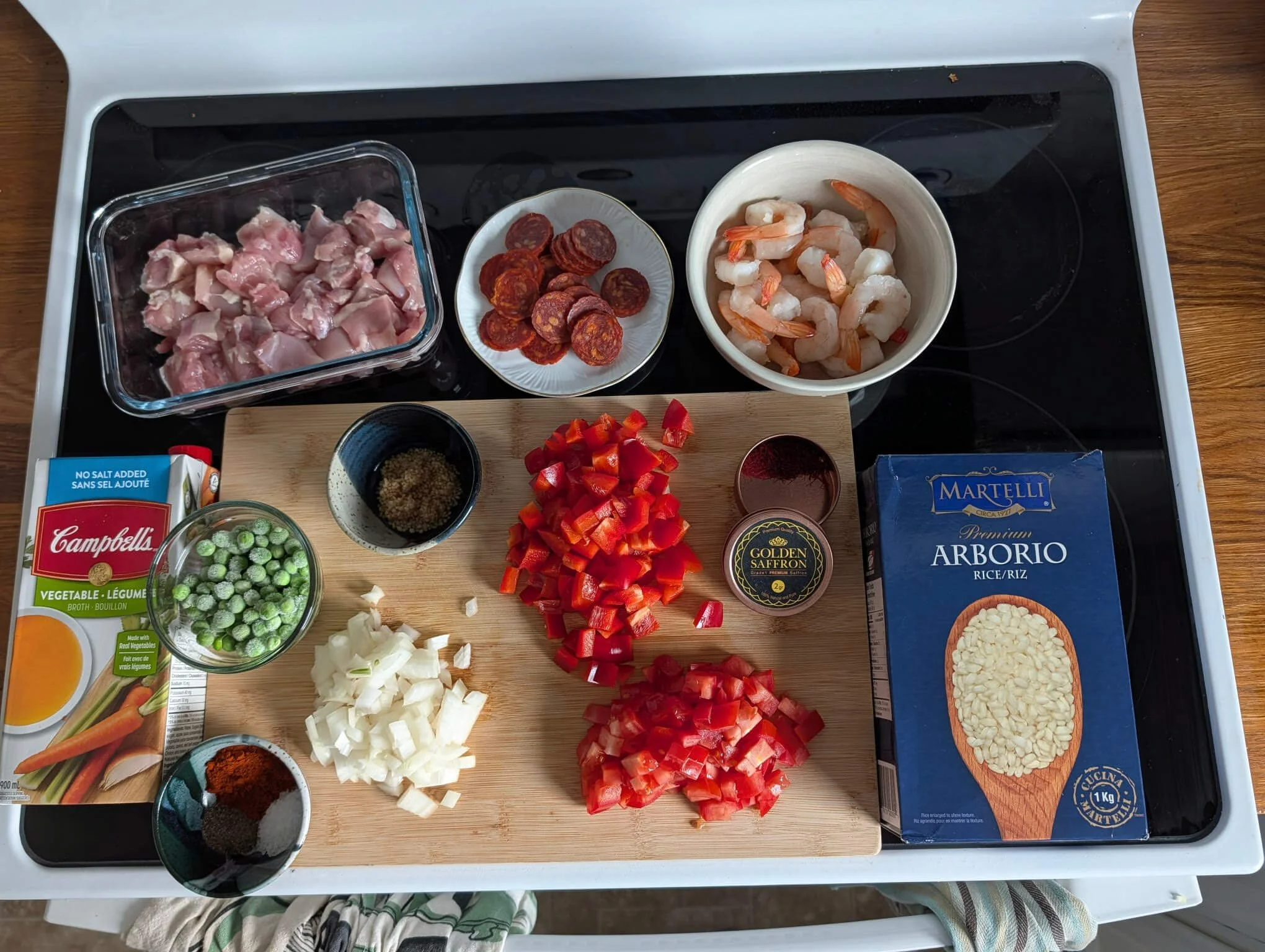
Everything gathered before it all comes together — chorizo, shrimp, peas, and good Arborio rice.
Our recipes turned to Canadian comfort food. Things like shepherd’s pie, tuna casserole, and potato soup became my usual dinner offerings. Maria had been taking a cooking class at school, and our kitchen became a classroom when she had to film herself making pasta, cookies, and pretzels once school moved to online learning. And then, after many emotional weeks, Maria was able to leave Canada and return to locked-down Spain in late April.
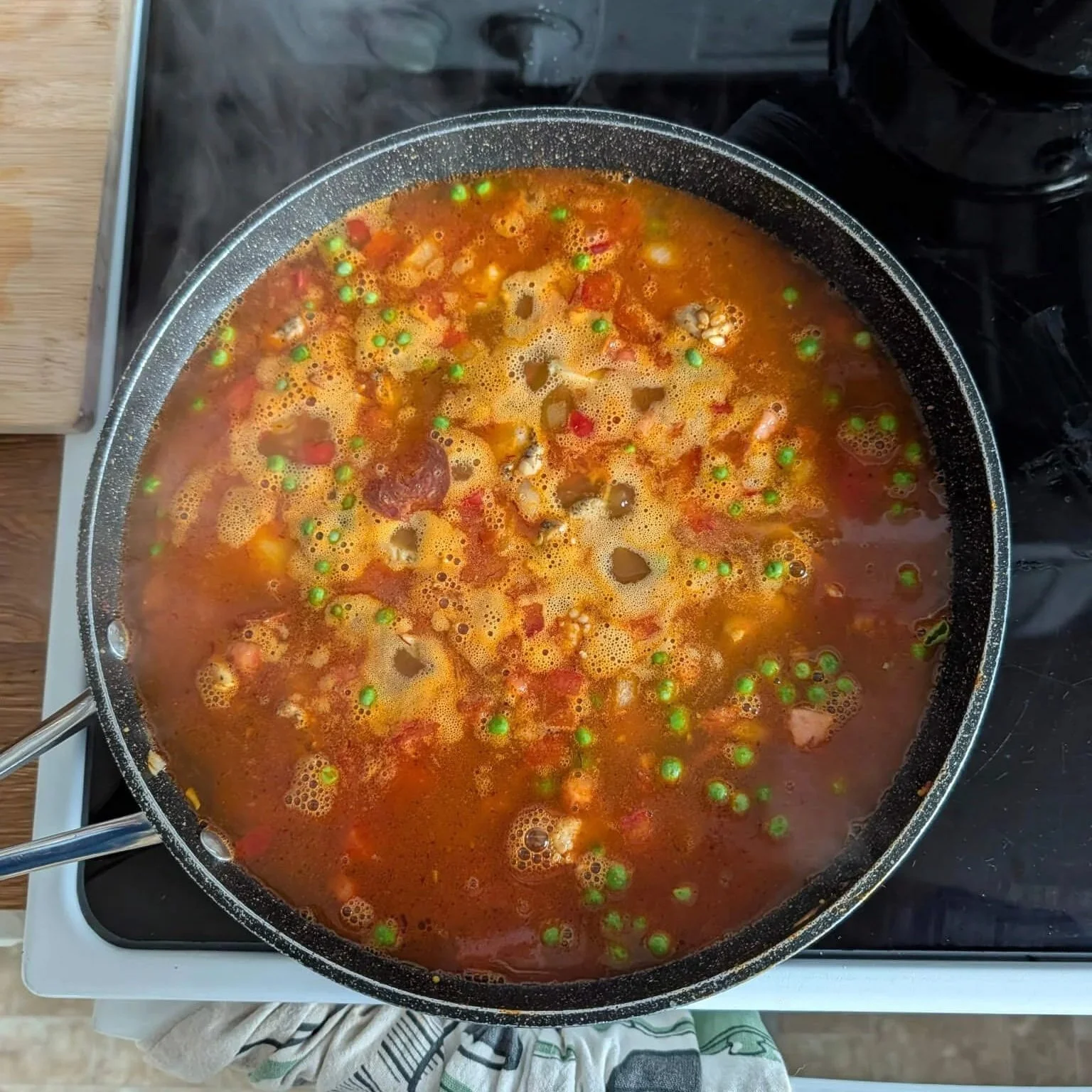
Genuinely simple and takes little effort — once the stock goes in, it mostly takes care of itself.
A year later, I made my first Paella. It was so ridiculously simple. And while we now make it several times a year, I always associate it with my regret that I didn’t offer my sweet, spirited Spanish daughter the one food she longed for.
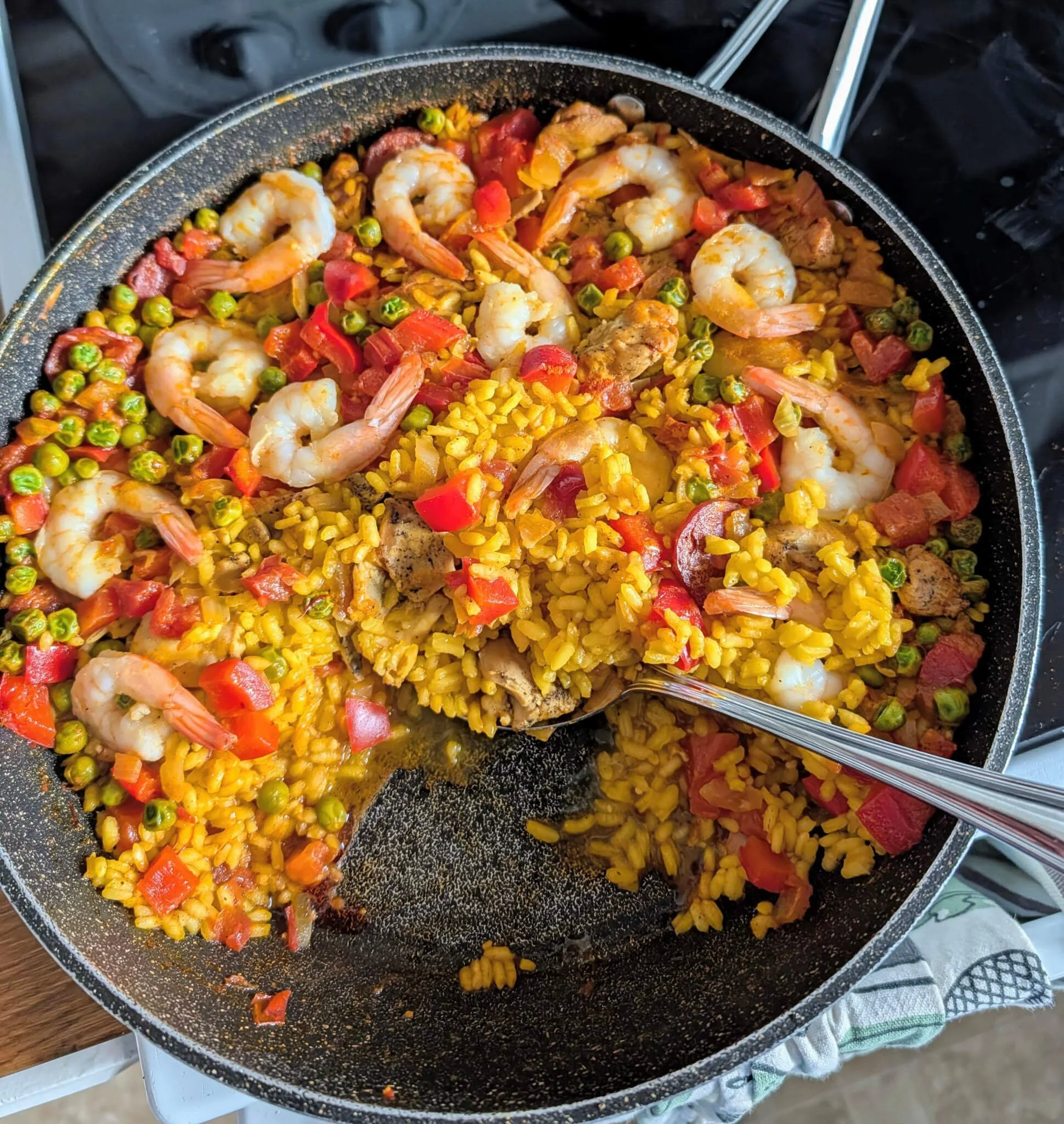
The Paella that took a year too long to make — but never misses the table now.
Traditional Paella
INGREDIENTS
4 to 4 ½ cup chicken broth, reduced salt if adding salt at the end
½ tsp saffron threads
2 tbsp olive oil
1 onion, diced
1 red bell pepper, diced
2 medium tomatoes, diced very small
4 cloves garlic, minced
1 tsp smoked paprika
2 cups Arborio rice
1 cup dry white wine
½ pound peeled and deveined shrimp
½ pound mussels, cleaned (you can use frozen once thawed)
½ pound sliced calamari OR chopped cod fillet if calamari makes you squeamish
½ cup frozen peas
1 lemon for serving
Salt and pepper to taste
SUPPLIES
A large, deep skillet, or Paella pan (no one I know has one of those!)
An additional saucepan for stock
Tin foil to cover while resting
METHOD
Heat 4 cups stock in the saucepan with the saffron, keep warm.
In the skillet, heat the olive oil over medium heat. Add the onion, garlic, and red pepper. Sauté until softened, about 5-7 minutes. Add the tomatoes and paprika, cook 2-3 minutes more.
Add the rice and toast for 1-2 minutes, stirring. Pour in the wine and let it absorb.
Add 4 cups of the warm saffron stock. Bring to a boil, then reduce heat to a simmer. Do not stir after this point.
Nestle the shrimp, mussels, and calamari/cod into the rice, pushing them down into the liquid. Simmer for 10-15 minutes until the rice is al dente. Add more stock if needed.
Remove from heat, add the peas on top. Cover with foil and let rest for 5-10 minutes.
Garnish with parsley and lemon wedges. Serve, making sure to scrape up the crispy rice crust (socarrat) from the bottom of the pan.
Author’s note:
This recipe can also be made as a chicken, shrimp and chorizo recipe by simply switching out the proteins in the same proportions.
YOU MIGHT ALSO LIKE
Sue:
Sue tends a kitchen garden in Alberta, growing as much of the family's food as the season allows. She writes about what comes out of the soil and what ends up on the table — honest, unfussy, and rooted in Canada.