
Peasant Bread and Cottage Baking
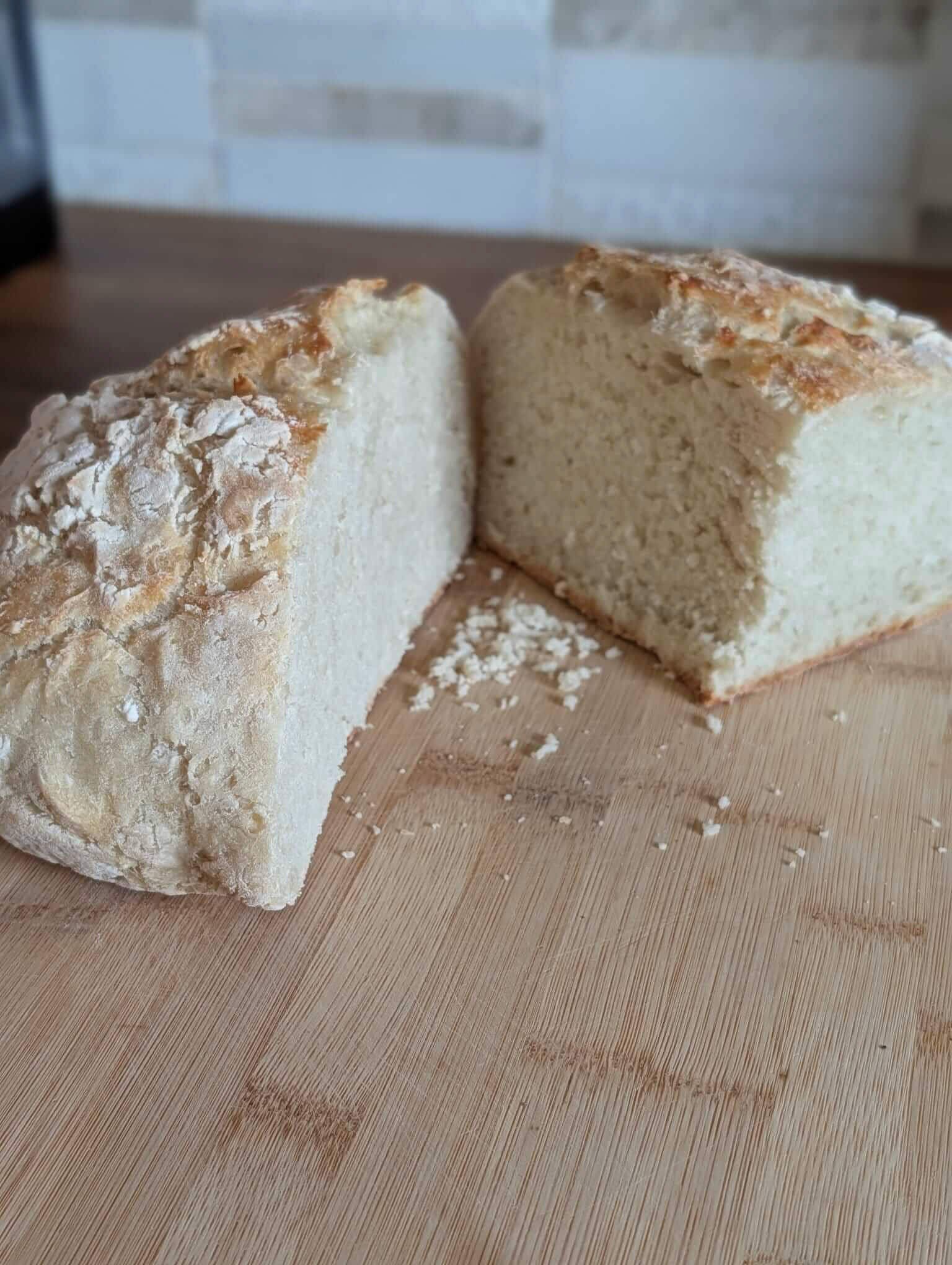
The smell baking bread fills the whole house, and reminds me of the days I baked bread with my Dad.
I grew up in a time when having a family cottage was a common Ontario experience. My family was fortunate enough to have a weekend retreat on the Niagara escarpment. Acres of forested land and some spectacular hiking trails in the summer, Georgian Bay within driving distance, gorgeous displays of colour in the fall, and skiing right across the valley in the winter. I know for my Dad, it was paradise.
One weekend, Dad and I headed out to the Post Office/Library in the little village of Kimberly. We were looking for books on baking bread. (Knowing the process of getting a library card these days, I’m really not sure how he managed to take books out from that little library, but he was a sweet talker, so I’m sure he worked his magic!) With our borrowed books in hand, we went shopping for everything we needed, and the next weekend we tried our luck at baking bread. I’d never even seen anyone make bread from scratch, so I had no idea what we were up against. Warm water and sugar made the yeast smell bad, which was good. The dough rose up like a balloon when we left it over the fridge to proof. We took it down after the required amount of time, and Dad punched his fist into the bowl. The balloon collapsed. Which was apparently also good.
Our first loaf was tough, but it smelled divine. We learned that year to add butter to the top, when it looked right after kneading (kneading was Dad’s job) and how to make fabulously soft, fluffy loaves of white bread. I will never forget the smell that filled our kitchen, or the excitement of taking those loaves out of the oven and smearing almost cool slices with butter and jam.
When the electric bread maker became a desired household appliance in the 1990’s, I started to make bread-maker bread regularly. My husband’s stepmother showed me how to use empty 1kg peanut butter jars to prepare all the ingredients for a week’s worth of bread in advance, making a loaf a day with just one prep day. That dump method served my family well. A fresh loaf of bread baked in the afternoon filled the house with that wonderful aroma as the kids came home from school. Our favourites were honey oat and French loaves, though we also used our bread maker regularly for pizza dough.
I don’t bake bread often these days, but when I do, I make peasant bread – that no-knead crusty loaf that bakes in a Dutch oven. Add rosemary and parmesan, asiago and sun-dried tomatoes, or garlic and rosemary, and the result can be different each time. That wonderful smell, and the desire to cut the loaf open immediately after taking it from the oven, have never changed.
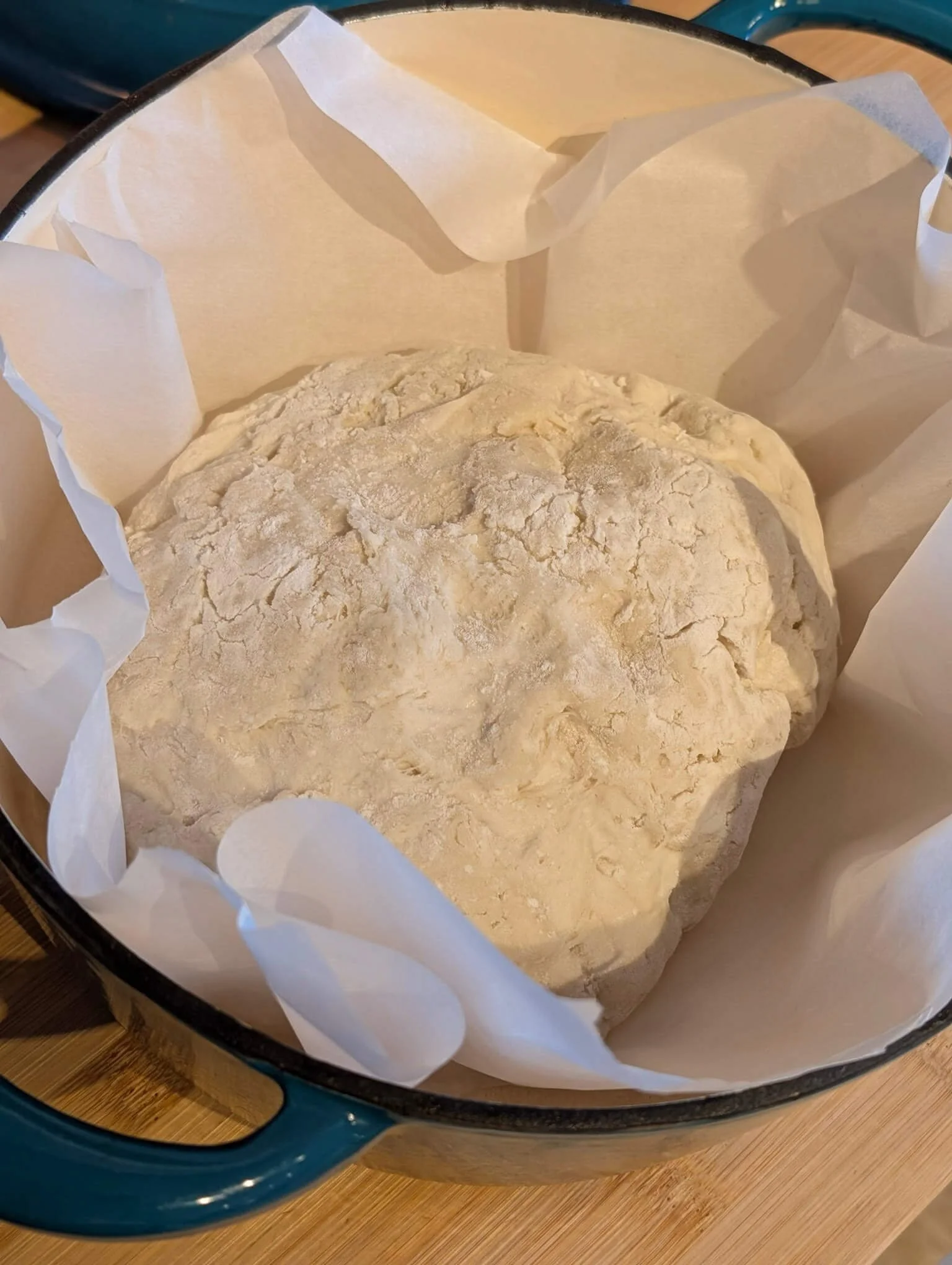
No-knead peasant bread dough in a parchment-lined Dutch oven, ready to bake
Peasant Bread
Ingredients:
1 ½ cups warm water
2.5 teaspoons quick-rise yeast
1 ½ teaspoon sea salt
3 ¼ cups all-purpose flour
Instructions:
In a large bowl, whisk together the water, yeast, and salt until the yeast and salt are dissolved.
Add the flour to the bowl and stir together with a wooden spoon until a sticky dough forms. It won’t look smooth, it will just look uniformly wet. It absolutely will be sticky!
Cover the bowl with a kitchen towel and leave in a warm place (over the fridge is perfect) for 2 hours, or until it has doubled in size.
Place your Dutch oven in a cold oven and preheat to 450F. Leave the Dutch oven for 10 minutes after the oven reaches the programmed temperature.
Tear off a square of parchment paper, large enough to hang over the edges of the Dutch oven. Flour the parchment, then slowly tip the bowl and plop your dough out of the bowl into the middle of the parchment. You can use a spatula to urge the dough out of the bowl. Using the edges of the parchment, place it inside the heated Dutch oven. Cover with the proper lid and bake at 450F for 35 minutes. Then remove the lid and bake another 5-10 minutes.
Using the edges of the parchment, remove the bread from the Dutch oven and let it cool completely before slicing. Slicing too soon can compress the middle and give it a gummy texture. You’ve worked too hard to be impatient now, although drooling during this period is most definitely allowed!
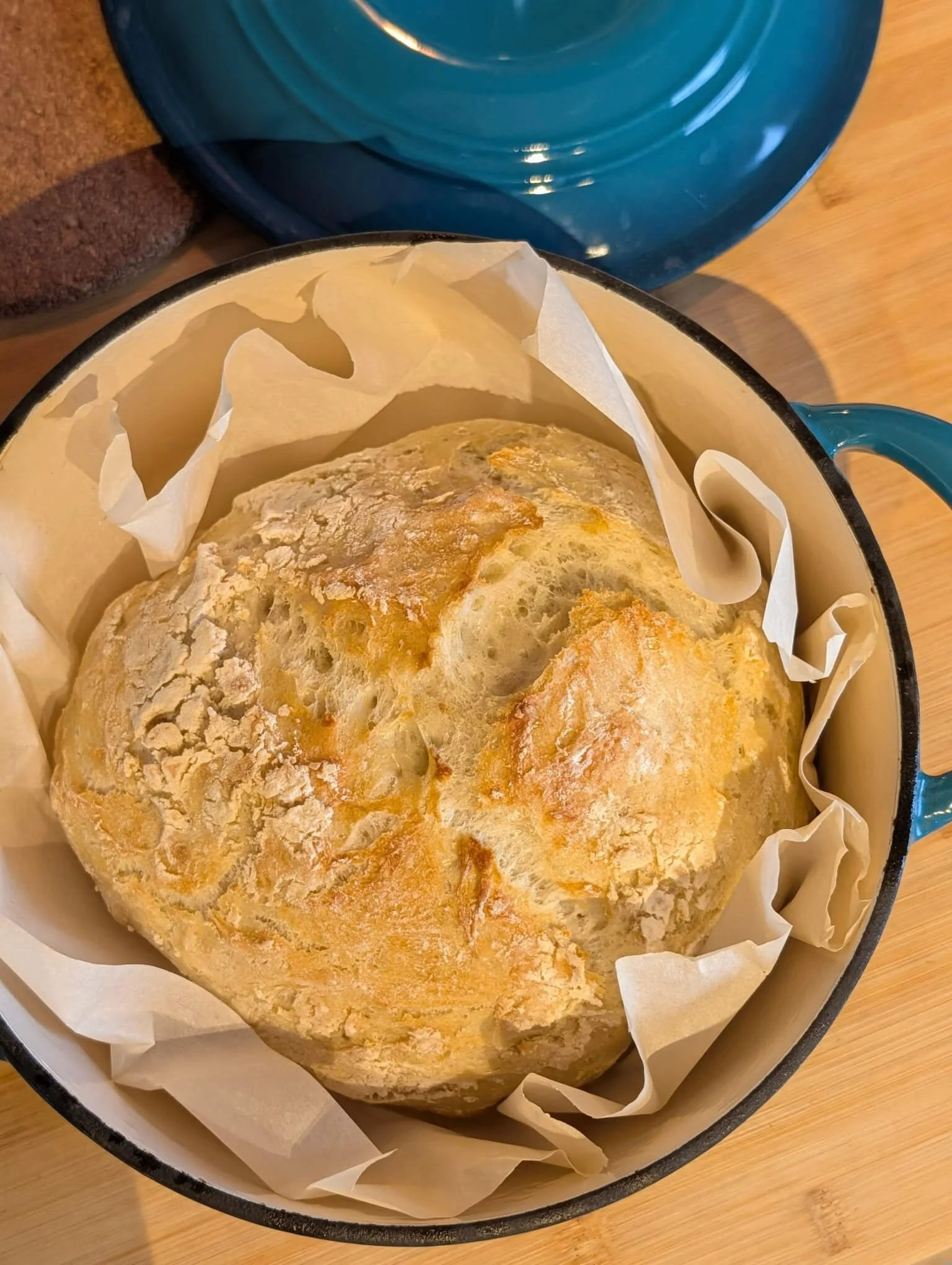
Freshly baked peasant bread with it’s golden crust, just out of the oven.